What stretch wrap actually does
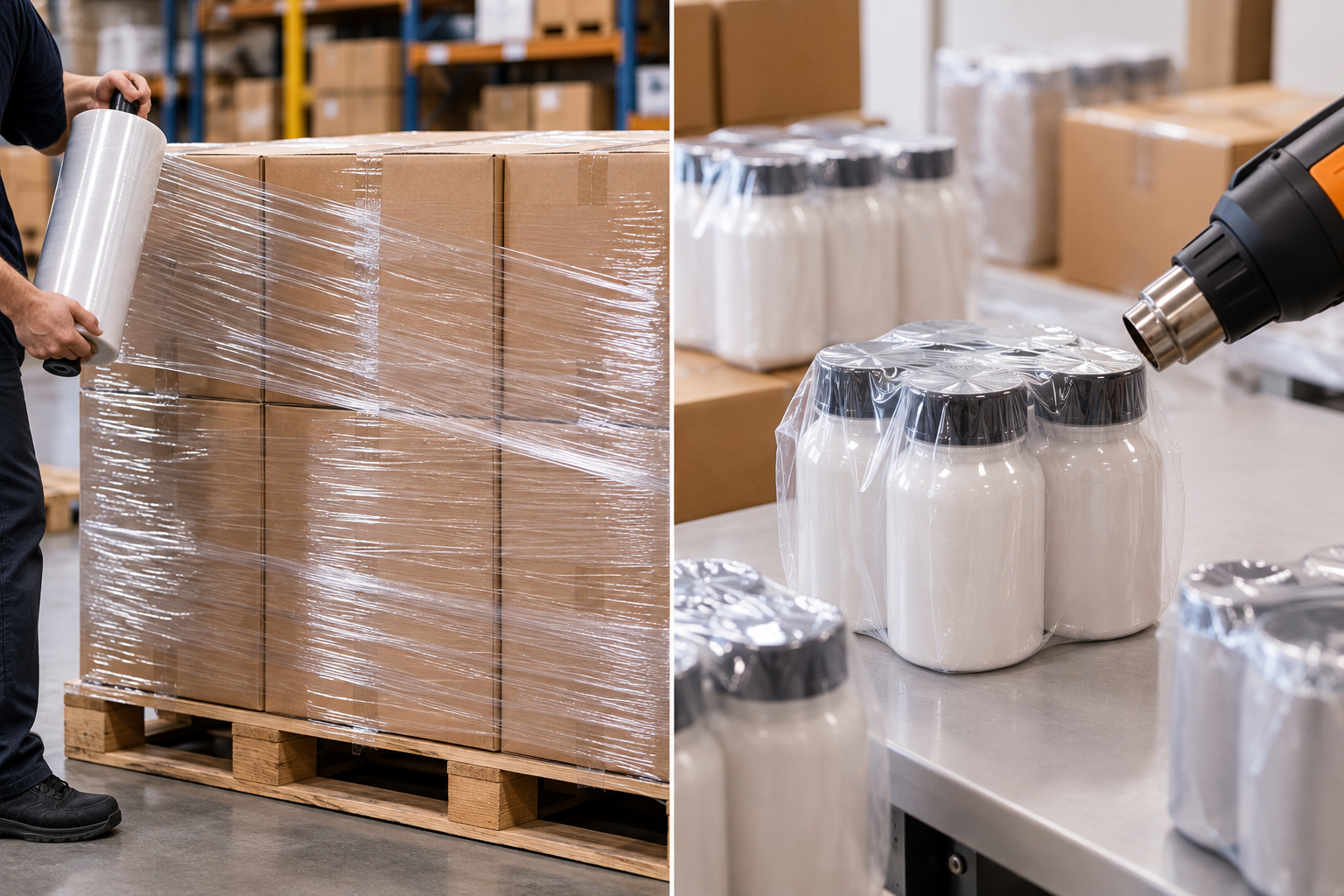
Stretch wrap is a stretchable film applied by hand or machine around a palletized load. It clings to itself layer over layer, and the tension from stretching it holds the boxes on the pallet tight enough to survive a forklift ride, a truck trip, or weeks sitting in a warehouse rack. It does not shrink or need heat. The holding power comes entirely from stretch and cling, which is why gauge, width, and wrap technique matter so much for getting a secure load. If your question is about keeping a stack of boxes from shifting on a skid, stretch wrap is the right product, and we cover gauge and width selection in detail in our stretch wrap guide.
What shrink wrap actually does
Shrink wrap is a different material entirely. It is a loose film that is wrapped or bagged around a product, then heated with a heat gun or passed through a shrink tunnel, which causes the film to tighten and conform tightly to whatever it is covering. The result is a tamper-evident, close-fitting wrap around an individual item or a small bundle, not a pallet. Retailers use it for multi-packs, GTA businesses use it for bundling accessories with a main product, and it is a common choice anywhere a product needs to look retail-ready and sealed rather than just physically secured.
The core difference in one line
Stretch wrap is about holding a group of boxes together through handling. Shrink wrap is about sealing one product or a small bundle for presentation and tamper evidence. One is a logistics product, the other is closer to a packaging and merchandising product, and swapping one for the other almost never works well.
Equipment and cost add up differently
Stretch wrap only needs the roll itself and, for hand wrapping, nothing more than the wrap, your pallet, and someone to walk it around the load. Machine stretch wrapping adds a turntable or wrapper, but hand wrap covers the vast majority of small and mid-size GTA operations without extra equipment.
Shrink wrap needs a heat source to actually work. A heat gun handles low volume fine, but anything beyond occasional bundling usually justifies a small shrink tunnel, which is a real equipment purchase and a dedicated step in your workflow, not just a roll of film pulled off a shelf. Budget for that equipment cost and the extra handling time before committing to shrink wrap for a new product line.
When a GTA business actually needs both
Plenty of operations use both products for different parts of the same business. A distributor might shrink wrap a two-pack of a retail product for presentation, then stretch wrap a full pallet of those shrink-wrapped two-packs for shipping to a customer. The two products are not competing for the same job here, they are doing two separate jobs in the same supply chain, which is the most common way both show up in the same warehouse.
Where small businesses get this wrong
Trying to use stretch wrap for retail bundling because it is already in the warehouse. It looks unfinished and does not seal the way a customer expects a retail multi-pack to look.
Trying to use shrink wrap to secure a pallet. It is not designed to stretch and cling the way pallet wrap is, and without the right equipment to apply it at that scale, it simply is not the right tool for holding a load together.
Buying shrink wrap without budgeting for a heat gun or tunnel, then discovering the film alone does not do anything until it is heated.
Shrink wrap vs stretch wrap checklist
1. If the job is holding boxes together on a pallet for transit or storage, use stretch wrap, not shrink wrap
2. If the job is sealing or bundling an individual product or small multi-pack for retail or presentation, use shrink wrap, not stretch wrap
3. Budget for a heat gun or shrink tunnel before ordering shrink wrap, the film alone will not shrink on its own
4. Stick with hand-wrap stretch film unless your pallet volume justifies a turntable or machine wrapper
5. If your business does both retail bundling and pallet shipping, expect to stock both products rather than trying to make one cover both jobs
What to do next
Look at the actual job you are trying to solve, securing a pallet or sealing a product, before you order film. The two products are priced and sold differently, and ordering the wrong one for a job usually means re-ordering once the first roll fails to do what you needed.