Why marketplace prep rules are stricter than your own standards
Fulfillment centres move inventory through automated sortation and high-volume manual receiving at a pace your own packing station never has to match. The packaging rules exist because a box or bag that is fine for a single parcel courier run can fail, tear, or get rejected by a scanner on a conveyor system built for speed, not care. The requirements are about keeping inventory moving and undamaged through that system, which is a different bar than simply protecting the product on a one-way trip to a customer's door.
Treat marketplace prep requirements as a separate checklist from your general shipping packaging, even if you use some of the same boxes and tape for both.
Outer case and carton requirements
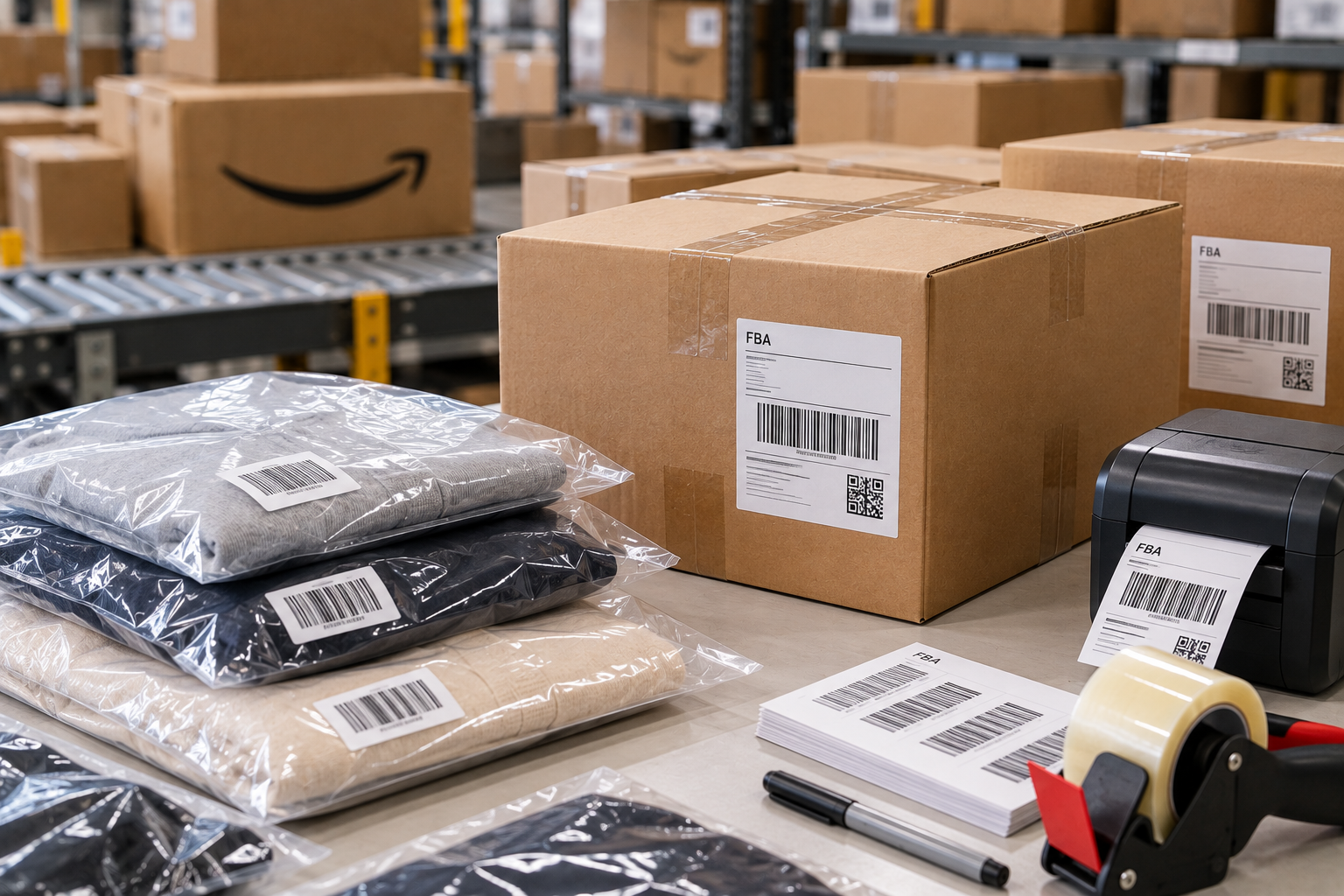
Most programs expect a new or like-new corrugated case, not a reused retail box with old shipping labels, barcodes, or branding still visible, since a leftover barcode can get scanned in error at receiving.
Standard single-wall board, in the 32 ECT range most GTA sellers already stock for everyday shipping, generally covers case packs within the usual weight limits for standard-size shipments, with heavier or bulkier shipments needing a sturdier box or a freight-style pallet instead.
Seal every case properly using a proper taping method across the top and bottom seams, not just a single strip down the centre. A case that opens in transit because it was under-taped is one of the more common and easily avoidable reasons a shipment gets flagged at receiving.
Keep an eye on maximum case weight and size limits, which are set by the program rather than by what your box can structurally hold, and which change from time to time. Always check the current limits in your seller account before building out a shipment plan around a box size you have not used for FBA before.
Poly bag requirements for apparel and soft items
Loose apparel, textiles, and similar soft units are usually required to ship poly bagged, individually, with the barcode visible through the bag rather than obstructed by a seam or fold. Bags above a certain size generally need a printed suffocation warning and a minimum film thickness, both of which are program requirements rather than general packaging best practice, so a bag that is perfectly fine for your own retail packaging may not meet marketplace rules.
Do not assume a bag you already stock for retail or your own DTC shipping automatically qualifies.
Check the current bag thickness and labelling requirements for the specific program before ordering a new run of poly bags for prep work.
Label and barcode placement
Every unit label or case label needs to sit on a flat surface where a handheld or fixed scanner can read it cleanly, not across a seam, a corner, or a fold in a poly bag. If a product already carries a retail barcode, it generally needs to be covered or removed so the scanner only picks up the correct marketplace barcode, overlapping barcodes are one of the most common receiving errors for new sellers.
Print labels at a size and resolution that holds up after handling, a label that smudges or peels in transit causes the same scanning problem as one that was placed in a bad spot to begin with.
Case packs and mixed-SKU shipments
Programs generally expect a case to contain a single SKU unless it is specifically built and labelled as a mixed-SKU case under that program's own rules. Mixing products into one case without following the mixed-SKU labelling process is a fast way to have an entire case held at receiving instead of just the one unit that was the problem.
Build your case pack quantities around what you can label cleanly and consistently, not around whatever fits physically in the box, a case that is technically full but awkward to label correctly is more trouble than it saves.
Where small GTA sellers most often go wrong
Reusing a retail shipping box that still has an old label or barcode on it, rather than starting with a clean case.
Using a tape or taping method that does not hold up to automated handling, a single strip of tape down the centre seam is not enough for anything moving through a sortation system.
Shipping poly bags that do not meet the current thickness or warning label requirements because they were ordered for retail packaging, not for marketplace prep.
Placing labels over a seam, fold, or existing barcode instead of a flat, clear surface, which causes scanning errors at receiving.
FBA and marketplace prep packaging checklist
1. Confirm current case size, weight, and labelling limits in your seller account before building a shipment plan, these rules do change
2. Use new or like-new corrugated cases, properly taped top and bottom, not reused retail boxes with old labels visible
3. Check poly bag thickness and suffocation warning requirements for your specific program before ordering a prep run
4. Place every label on a flat surface, clear of seams and folds, and cover or remove any old retail barcode
5. Follow single-SKU case rules unless you have specifically set up and labelled a mixed-SKU case
6. Keep a small stock of compliant cases and poly bags on hand so prep day is not held up waiting on supply
What to do next
Before your next shipment, pull the current packaging and prep requirements from your seller account rather than relying on what worked last time, these programs update their rules more often than most sellers expect. Then check whether your current boxes and bags actually match, not just whether they look close enough.
Packaging Shop supplies new corrugated cases and compliant poly bags for GTA sellers prepping FBA and marketplace shipments, and can help you settle on the right case size and quantity for your SKUs. Same-day local delivery across the GTA, walk-in pickup at our North York location, or pickup-only at our Mississauga and Scarborough locations.