
Why storage matters: humidity is the silent enemy
Corrugated is made of paper fibers, and paper absorbs moisture from the air. When relative humidity rises above about 60 percent, the fibres swell and the board loses strength. A 32 ECT box stored at 80 percent humidity can drop to 22-24 ECT performance, enough to fail under stacking that it would normally handle.
The problem compounds because you cannot see it happening. The box looks fine. It seals normally. It arrives at the customer looking perfect and then splits or collapses under weight because the strength was already gone before it was packed.
Toronto winters bring cold but often dry air. Spring and summer are the high-risk months because humidity climbs and storage spaces warm up. Damp basement storage, outdoor or semi-outdoor warehouses, and spaces near loading docks where vehicles bring in moisture are the worst offenders.
Temperature swings also matter, especially in transitions
Corrugated handles temperature changes, but rapid swings from cold to warm cause condensation. A stack of boxes brought from a cold loading dock into a warm warehouse collects water on the outer boxes. That water sits and penetrates the board, reducing strength and risking mould.
The practical impact: move boxes indoors and let them stabilize to room temperature before breaking the wrap and starting to use them. Twenty minutes in a controlled space is usually enough.
Long-term storage in genuinely cold spaces, like an unheated Toronto warehouse in January, does not damage the board, but it does reduce the performance of tape adhesive and makes the boxes brittle. Acrylic tape performs better than hot melt in cold storage. Handle very cold boxes gently when opening, the board is more prone to creasing.
How to stack boxes for flat storage
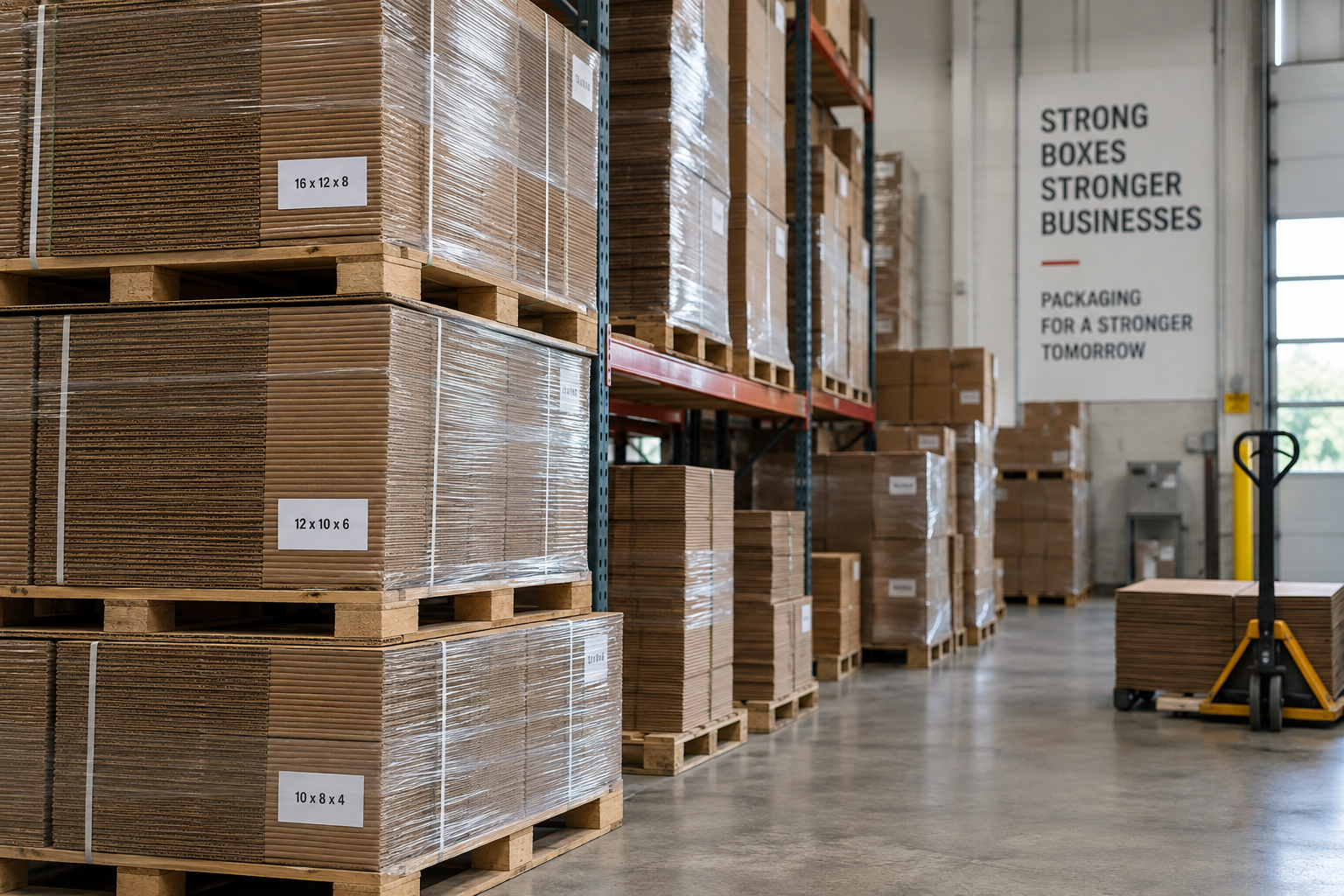
Flat storage is how most GTA businesses hold corrugated inventory. Boxes come in bundles of 25 or 50, wrapped, and they stack.
Stack height depends on the box size and the floor. A pallet of 40-case bundles should not go more than six bundles high, around 60-72 inches. Smaller cartons can stack higher, but the weight per square inch of the stack base adds up fast. A stack of small boxes six high can weigh over 2,000 lbs on a footprint of maybe 24 x 24 inches.
Check what is underneath. Concrete is fine. Dirt floors, outdoor asphalt, or waterproofed but not sealed concrete will wick moisture up into the bottom bundles, especially in spring. Always put down a pallet or wood platform to create air space under the stack.
Do not stack directly on top of existing older stock. Rotate the inventory, first-in-first-out. Boxes at the bottom of a six-bundle stack sit under 10,000+ lbs of pressure and lose strength over time, even in good conditions.
Do not crush stacks by stacking other items on top of wrapped bundles. Once boxes are wrapped flat, treat them as fragile stock. That wrap is holding the bundle together, not protecting against crushing from above.
Climate control is not always necessary, but consistency is
You do not need to heat and humidify a storage space to 68 degrees and 45 percent relative humidity, though if you already have that climate in your receiving area, keeping boxes there is smart.
What matters is consistency. A space that stays 50-60 percent humidity and 55-70 degrees year-round will keep your boxes strong. A space that swings from 30 percent to 80 percent humidity based on the season will not.
Cheap tools: a basic hygrometer costs under 20 dollars. Mount one in your storage area and check it monthly. If you see humidity regularly above 65 percent or approaching 80 percent, you have a problem worth solving. A desiccant pack or two in the corner of a small storage area, or a small dehumidifier in a larger one, is cheap insurance against losing a pallet of boxes to moisture.
Protect against pests and contamination
Clean, dry storage protects against rodents, insects, and mould. Corrugated is food for rodents if they get access. A gap under a door or a small hole in a roof is an invitation.
Check your storage regularly. Monthly walks around the space catch problems early. Look for droppings, damaged boxes, water stains, or visible mould on lower bundles. Do not wait until a whole pallet is affected.
If you store food-grade or pharmaceutical boxes, keep them completely separate from other inventory. Cross-contamination is not just a cleanliness issue, it can violate compliance requirements.
For high-value or sensitive contents, box wrapping stays on until the box is ready to use. It protects against dust, spills, and marking.
Seasonal storage planning for high-volume shippers
Many GTA businesses run seasonal patterns. Retailers peak in October through December. Movers and logistics companies peak in May through August. Food and agriculture peak around harvest.
Plan your storage for peak season, not average. If you normally stock 50 pallets but need 200 in June, buying 150 pallets three months early makes sense only if you have somewhere to store them properly. Poor storage conditions are not a substitute for warehouse space you do not have.
Many businesses buy the correct amount at the right time for peak season, then leave those boxes in suboptimal storage for months before use. A few hundred dollars in climate control or a small rental space during the buildup period can save thousands in failed shipments and emergency reorders.
Box age and shelf life
Corrugated does not have an expiration date, but it does age. A box stored five years will perform slightly differently from a box stored five months because the fibres dry and become slightly more brittle over that time. The difference is small for most uses, but it is real.
Tape adhesive degrades faster. Hot melt tape loses grip after about a year of storage in a warm space. Acrylic tape holds much longer, over two years. If you store boxes and tape together for a season and then wonder why the tape suddenly stopped working, box aging is probably not the issue. Tape shelf life is the culprit.
For most shipping operations, boxes do not sit more than six months. For long-term storage, acrylic tape is the better choice.
Your corrugated storage checklist
Before you stack boxes for storage:
Keep humidity below 65 percent, ideally 45-60 percent. Use a hygrometer to check.
Stack no more than six bundles high on solid ground or pallets. Never stack on dirt or outdoors without a platform.
Allow boxes to warm to room temperature after moving from cold storage before breaking the wrap and using them.
Rotate inventory first-in-first-out. Do not leave bundles at the bottom of a stack for months.
Inspect monthly for moisture, pests, or contamination.
Keep tape stored separately and replace hot melt tape yearly if it sits in warm storage.
Check the location of your storage space. If it is damp, cold, or exposed to direct sun, that is your signal to move or improve conditions.
Packaging Shop delivers same-day local delivery across the GTA, offers walk-in pickup at our North York location, and pickup-only at our Mississauga and Scarborough locations, so you do not have to store three months of inventory at once. Call (437) 688-3777 or browse our corrugated range online to see what fits your actual usage, or pick up smaller quantities more often to reduce your storage footprint.