
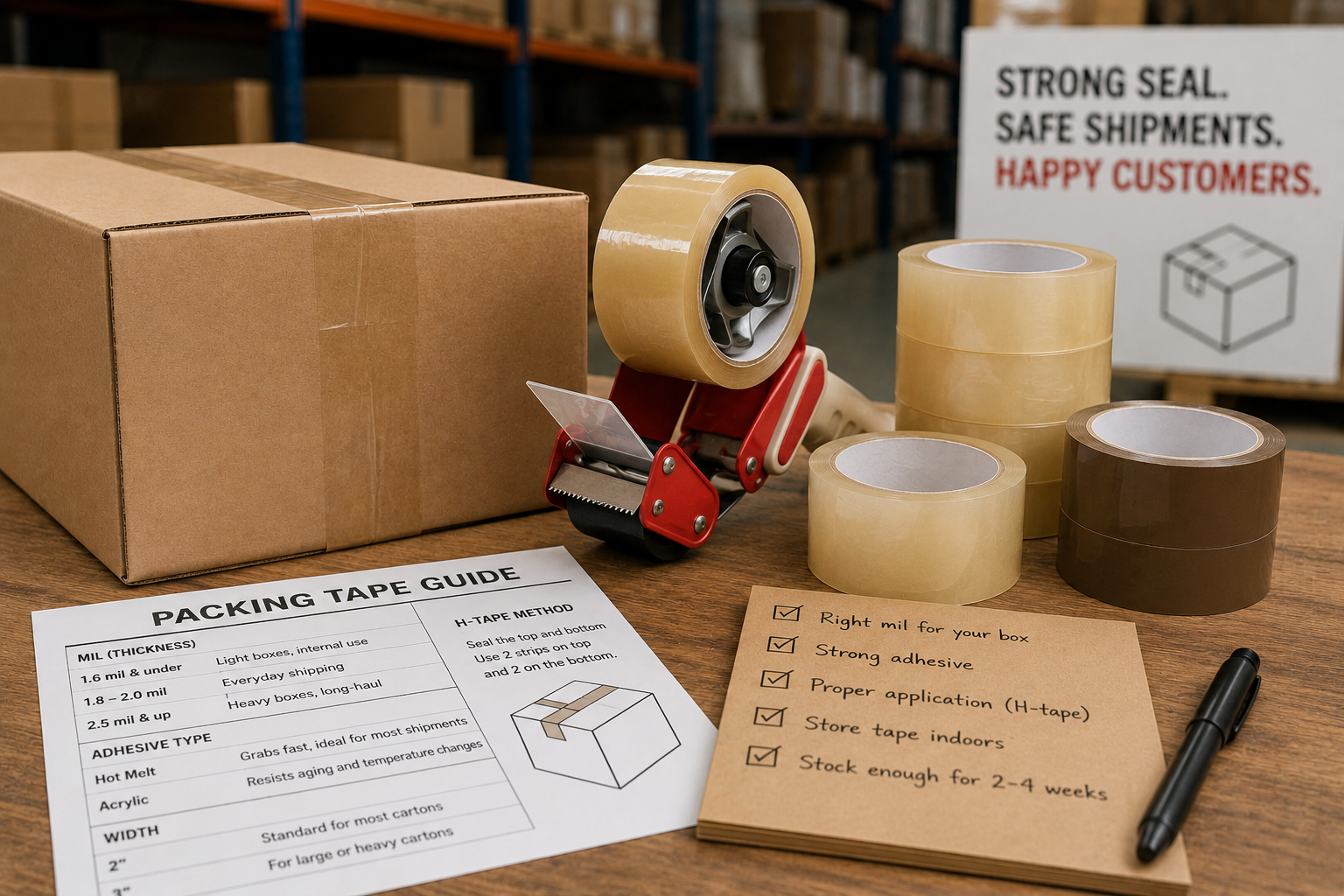
Mil thickness: what the number means and where the line is
Tape thickness is measured in mils (thousandths of an inch). It covers both the backing film and the adhesive layer, so a thicker tape is generally both stronger and stickier, though adhesive type matters just as much.
| Mil | Best for |
| 1.6 mil and under | Light, low-weight boxes; internal transfers; short trips |
| 1.8 to 2.0 mil | The everyday standard, ecommerce and general courier shipping |
| 2.5 mil and up | Heavy boxes, double-wall cartons, long-haul or multi-handling freight |
If you only stock one tape, 1.8 to 2.0 mil is the safe choice. Going below that to save a few cents per roll is the single most common false economy we see: a burst seam costs you the product, the reship, and the customer.
Adhesive type: hot melt vs. acrylic
Two tapes at the same mil can behave completely differently depending on the adhesive.
- Hot melt (synthetic rubber) grabs fast and holds strongly on recycled corrugated, which is what almost every box on the market is made of today. It's the better choice for standard shipping, and it's what most GTA operations run.
- Acrylic sticks more slowly but resists aging, UV, and temperature swings better. It's the choice when boxes sit in storage for months, get stacked in a hot or cold space, or ship somewhere with big temperature changes along the way.
A quick rule: if the box gets sealed and shipped within days, use hot melt. If the box gets sealed and then sits, consider acrylic.
Cold weather is the GTA variable most people forget
Toronto-area docks, trailers, and unheated storage rooms drop well below the temperature most tape is rated to apply at. Cold corrugated absorbs adhesive poorly, and cold tape doesn't tack. That's why seals that were fine in August start popping in January.
Three things that help:
1. Store your tape rolls indoors at room temperature, not on the dock or in the truck overnight.
2. Let cold boxes warm up before sealing where you can, even 20 minutes indoors makes a difference.
3. Step up a mil or move to a cold-temperature rated tape for winter outbound freight rather than double-taping every carton.
Width and dispensers: small choices that save real time
- 2" is the standard width for corrugated cartons and works with every common hand dispenser. Stick with it unless you have a specific reason not to.
- 3" covers more seam per pass and is worth it for large or heavy cartons where you'd otherwise run two strips side by side.
- A proper pistol grip dispenser cuts sealing time per box roughly in half compared with tearing by hand, and it lays tape down under tension so the seal actually bonds. If your team is hand-tearing tape, that's the cheapest productivity fix on this list.
How to seal a carton so the tape does its job
Tape rarely fails on its own. It fails because it wasn't applied over enough surface.
1. Use the H-tape method: one strip down the centre seam, then one strip along each of the two end seams, forming an H.
2. Extend each strip 2 to 3 inches down the sides of the box, not just across the top. That's where the holding power comes from.
3. Press the tape down as you go so it makes full contact rather than bridging over flute ridges.
4. For heavy or double-wall cartons, tape the bottom the same way you tape the top. Bottom blowouts are more common than top failures.
How much tape you actually need
A standard 2" x 55 yard roll seals roughly 15 to 20 average cartons using the H-tape method, fewer if you're double-taping or sealing large boxes. Buying by the case of 36 is meaningfully cheaper per roll than buying singles, and it means one less reorder during a busy stretch.
If your usage is steady, work out your rolls per week from your carton count and order to a two to four week supply, topping up locally rather than holding a quarter's worth of tape in a corner.
Your packing tape checklist
Before you order:
1. Mil: 1.8 to 2.0 mil as the default, 2.5 mil and up for heavy or double-wall cartons
2. Adhesive: hot melt for ship-now boxes, acrylic for boxes that sit in storage
3. Width: 2" standard, 3" for large or heavy cartons
4. Winter: store rolls indoors, warm cold boxes, step up for cold outbound freight
5. Application: H-tape method, 2 to 3 inches down the sides, top and bottom on heavy cartons
6. Quantity: budget 1 roll per 15 to 20 cartons, buy by the case of 36
7. Dispenser: use a pistol grip, hand-tearing costs you time and seal quality