
Why peak season catches GTA businesses off guard
Most small and mid-size operations order packaging reactively, when the shelf looks low. That works fine at steady volume. It breaks down during a surge because:
- Lead times don't scale with demand. If your usual supplier needs a week to restock and your order volume triples for six weeks, you're structurally behind before the season even starts.
- Everyone orders at once. During known surge windows (holiday shipping, September moving season, spring cleanouts), packaging demand spikes across the whole GTA simultaneously, the businesses that ordered early get priority, the ones that didn't wait longer.
- Box mix shifts, not just volume. A moving surge needs more medium and large boxes and more tape per box; a holiday ecommerce rush skews toward your standard SKUs but at 2-3x the run rate. Ordering "more of the same" isn't always the right fix.
Step 1: Forecast from last year, not this week
Pull your order or shipment counts from the same period last year (or the last comparable surge) and use that as your baseline, not current run rate. If you don't have last year's numbers, use your current weekly usage and plan for 2-3x during the peak weeks, that's the range most GTA shippers and movers see during known surge periods.
Step 2: Lock in your core sizes two to three weeks out
You don't need to stock every size heavier, you need your three or four highest-volume sizes covered:
- Reorder your top sizes at the bulk (250-unit) price break rather than smaller batches, you'll need the volume anyway, and the per-box price drops.
- Confirm your supplier's lead time *before* the surge starts, not during it. If same-day or next-day delivery is available locally, you can run leaner on standing inventory and top up mid-surge instead of over-buying up front.
- If your peak involves larger or bundled orders (common in Q4 ecommerce and in moves), add one size up from your normal range, don't force oversized loads into your everyday box.
Step 3: Don't let tape and wrap run out first
Boxes get the attention; tape and stretch wrap are what actually run out mid-surge, because usage per box is easy to under-forecast.
- Tape: figure roughly one roll of 2" tape per 15-20 standard boxes using the H-tape method (more if you're double-taping heavier shipments). Buy by the case of 36 for surge periods, it's meaningfully cheaper per roll than singles and means one less reorder mid-rush.
- Stretch wrap: if you're palletizing outbound shipments or consolidating a move, confirm you have enough 80-gauge film on hand for your expected pallet count, running out mid-load means an emergency run, not a quick top-up.
Step 4: Plan for damage and reships, not just volume
Higher volume periods also mean higher handling volume, more couriers, more transfers, more chances for a box to get crushed or a seal to fail. Two habits that pay off specifically during peak season:
- Stick to your standard box and tape spec even when you're moving fast, rushed re-boxing with mismatched sizes or thin tape is where damage rates climb.
- Keep 5-10% buffer stock of your top sizes rather than ordering exactly to forecast. Running out mid-surge costs more (rush orders, delayed shipments) than a small buffer.
Step 5: Know your local backup option
Even with good forecasting, surges are unpredictable. The businesses that handle a shortfall well have a same-day local option lined up *before* they need it; the ones that don't spend a surge day scrambling between big-box retailers paying 3-4x for a handful of boxes.
For GTA businesses, that means confirming same-day delivery, walk-in pickup at our North York location, or pickup-only availability at our Mississauga and Scarborough locations ahead of your surge window, not discovering it mid-shortage.
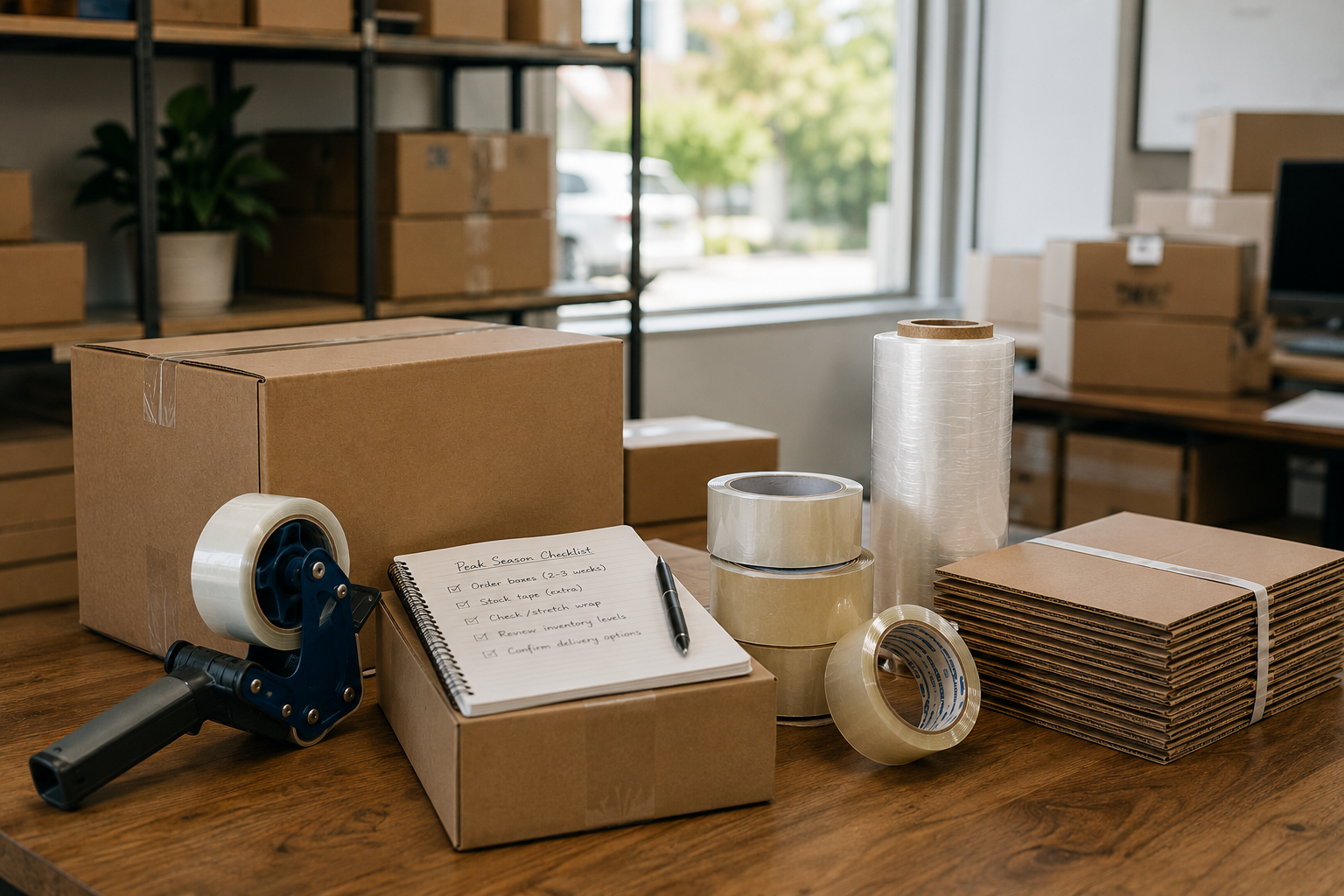
Your peak season supply checklist
1. Forecast, use last year's surge data or 2-3x current run rate
2. Core sizes, lock in your top 3-4 sizes at the bulk price break, 2-3 weeks ahead
3. Tape, order by the case, budget ~1 roll per 15-20 boxes
4. Stretch wrap, confirm enough 80-gauge film for expected pallet volume
5. Buffer, keep 5-10% extra stock on top sizes
6. Backup plan, confirm same-day local delivery before you need it, not during
Whether it's a holiday shipping rush, a warehouse move, or a moving-season spike, the fix is the same: order early, order your real mix, and keep a local backup in your pocket.