
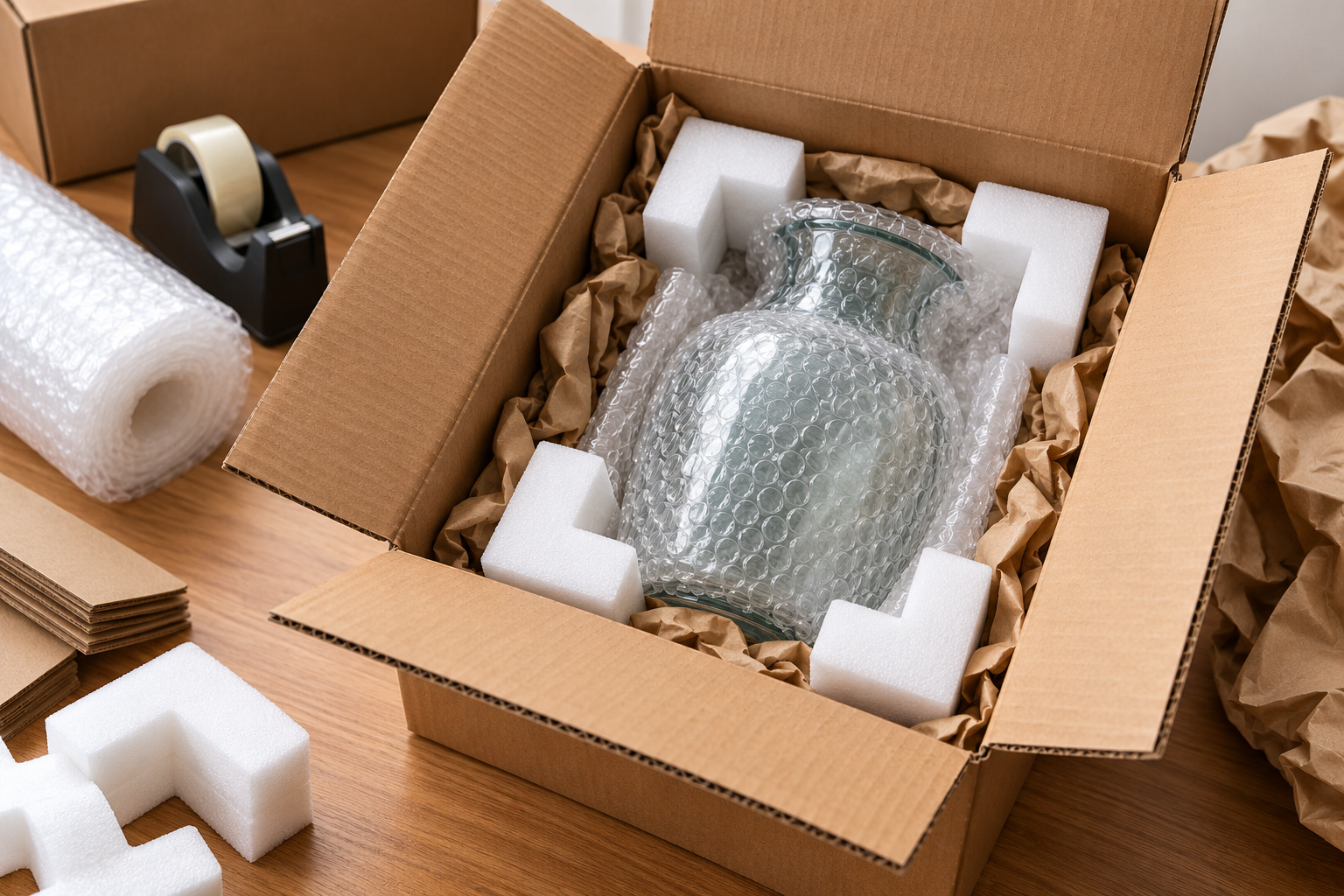
Fragile items survive shipping when three things are all true at once, the item cannot touch the outer box directly, it cannot shift once packed, and the corners and edges are protected specifically, since that is where nearly all shipping damage happens. Get those three right and a basic double-wall box will outperform an expensive single-wall box packed carelessly. Here is how to build that protection properly for glass, electronics, ceramics, and anything else you cannot afford to have arrive broken.
Why corners and edges break first
Drop testing and real-world damage claims agree on this, corner impacts account for the large majority of transit damage, followed by edge impacts, with flat-side damage being comparatively rare. A box dropped or dropped-kicked in transit almost always lands corner-first or edge-first, concentrating the full force of the impact into a small area.
That is why generic cushioning in the middle of a box does less than people expect. Padding that surrounds the item everywhere except the corners is protecting the part of the box least likely to take the hit.
Building protection in layers
Treat fragile packing as three separate layers, each doing a different job:
1. Item-level protection. Wrap the item itself first, bubble wrap for anything with a hard surface that can chip or scratch, foam sheeting or pouches for items sensitive to pressure marks. This layer protects against contact damage during handling, not impact.
2. Corner and edge protection. Purpose-built foam corner guards, or corrugated edge protectors, placed on every corner and long edge of the item before it goes in the box. This is the layer most GTA small shippers skip, and the one that matters most.
3. Void and cushioning layer. Once the item is wrapped and corner-protected, fill the remaining space so nothing can move. A wrapped item sitting loose in a box will still find the corners of that box on impact, cushioning stops that motion before it starts.
Skipping any one layer weakens the other two. Good corner protection on an item that shifts freely inside the box still fails, because the corner guard moves with the item and no longer lines up with the point of impact.
Choosing the right box, not just the right filler
Fragile shipments deserve a strength conversation before a filler conversation:
- Double-wall corrugated is the practical default for anything glass, ceramic, or electronic. The extra layer resists crushing under stacking pressure in a way single-wall cannot, and that crush resistance matters more for fragile goods than for durable ones.
- Box-in-box packing, a smaller box holding the wrapped and cushioned item, itself cushioned inside a larger outer box, is worth the extra material for high-value or genuinely irreplaceable items. It adds a second full cushioning layer between the item and any outside impact.
- Corrugated dividers and inserts are the right call when you are shipping multiples of the same fragile item, glassware sets, jars, bottled product. Dividers stop items from contacting each other directly, which is a more common cause of breakage than outside impact when multiple fragile pieces travel together.
Matching material to item type
Different fragile categories fail in different ways, and the packing should reflect that:
- Glass and ceramics. Prioritize corner and edge protection above all else, these items crack from concentrated point impact more than from general pressure. Wrap individually, never let glass surfaces touch each other directly even through bubble wrap.
- Electronics. Anti-static consideration aside, the bigger risk is often internal component shift, not the outer casing. Foam that immobilizes the item fully, rather than just cushioning it, matters more than wrap thickness.
- Artwork, frames, and flat glass. These need rigid protection on both flat faces, not just corner guards, corrugated sheet stock sandwiching the piece front and back prevents flexing, which is what cracks flat glass and stresses frame joints.
- Bottled or jarred product. Individual sleeves or dividers plus a snug-fitting box matter more than filler volume, loose bottles that can knock together will eventually break regardless of how much paper surrounds them.
The shake test
Before sealing any fragile shipment, close the box and gently shake it. If you can hear or feel movement, it is not ready to ship. This takes ten seconds and catches the single most common cause of fragile item damage, an item that was wrapped correctly but never actually immobilized inside the box.
Your fragile packing checklist
1. Confirm the box is double-wall for anything glass, ceramic, or electronic
2. Wrap the item itself for contact protection, not as a substitute for cushioning
3. Add corner and edge protection specifically, that is where impact damage concentrates
4. Fill remaining space so the item cannot shift, then run the shake test before sealing
5. Use dividers whenever multiple fragile items ship in the same box
6. Consider box-in-box packing for high-value or irreplaceable items
7. Match the protection style to the failure mode, point impact for glass, internal shift for electronics, flexing for flat glass and frames